Piplup Master Set #0393
33 cards47 in the English master set (+ 14 reverse holos)22 sets7 Japanese exclusivesJapanese cards (19)2007–2025Printable checklist (PDF)
A Piplup master set is 47 cards: 33 cards across 22 sets (2007–2025), plus 14 reverse holos. At today's market prices it costs at least $1,138 (39 of 47 priced), and the most valuable card is Blastoise & Piplup GX #215/236 from Cosmic Eclipse ($403.57).
Japan has printed 19 Piplup cards across 9 sets since 2006; 7 of them never came to English and they are slotted into the timeline below by release date. See every Japanese Piplup card.
Every Piplup card
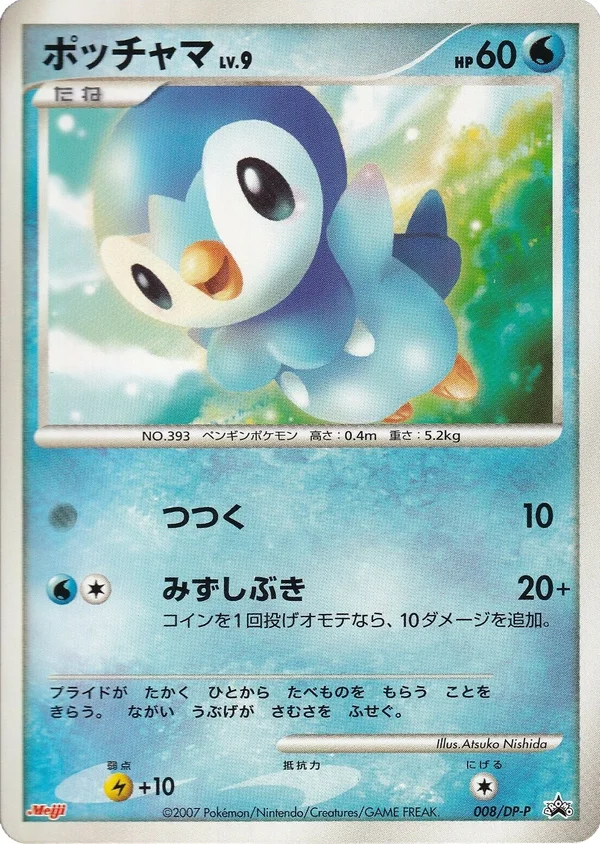 Piplup#8 · DP-P プロモカードHolo2006—
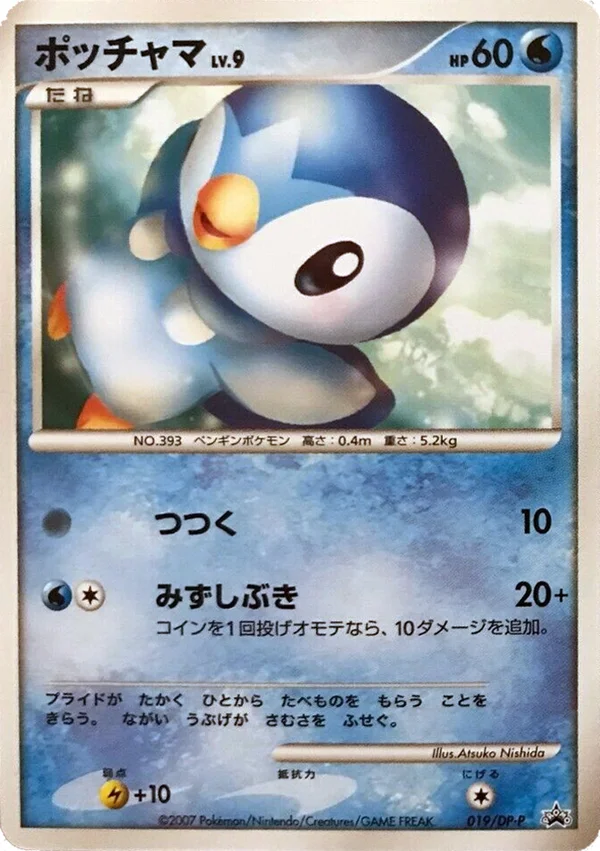 Piplup#19 · DP-P プロモカードHolo2006—
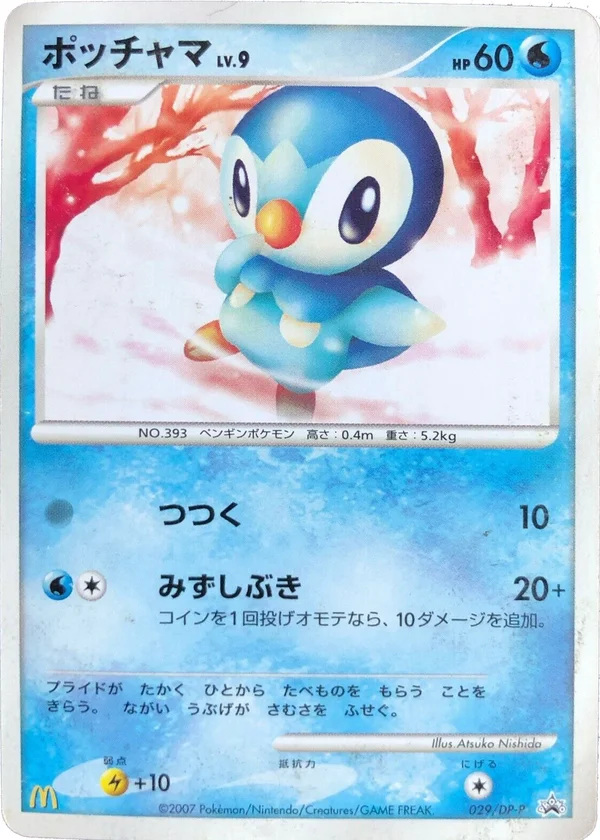 Piplup#29 · DP-P プロモカードHolo2006—
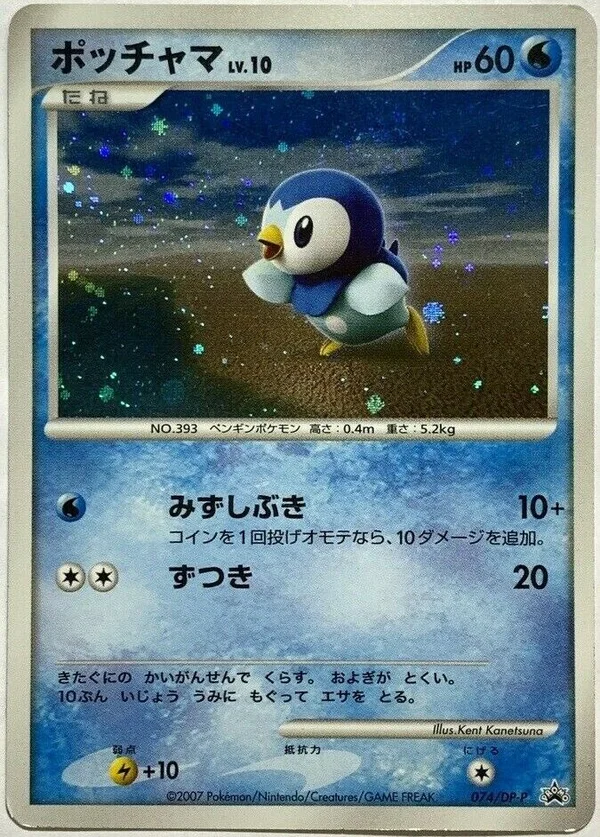 Piplup#74 · DP-P プロモカードHolo2006—
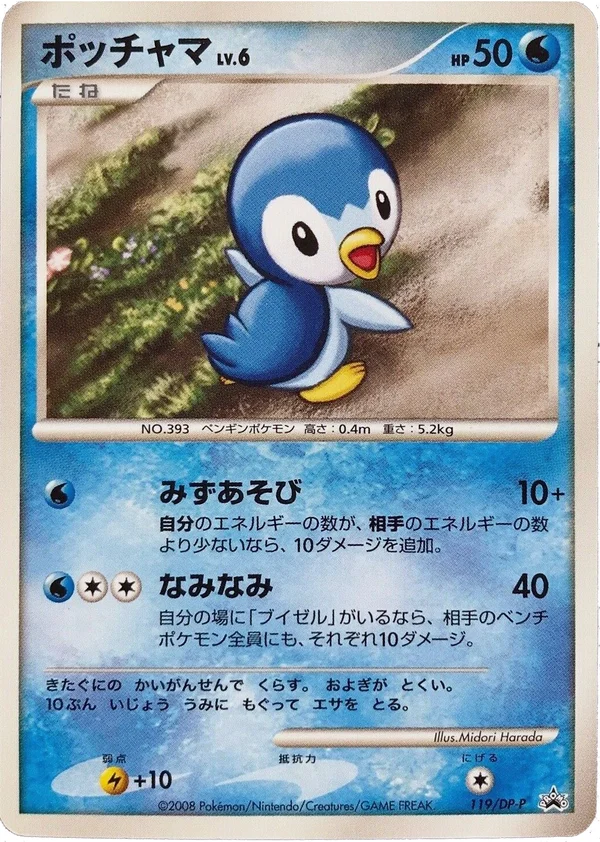 Piplup#119 · DP-P プロモカードHolo2006—
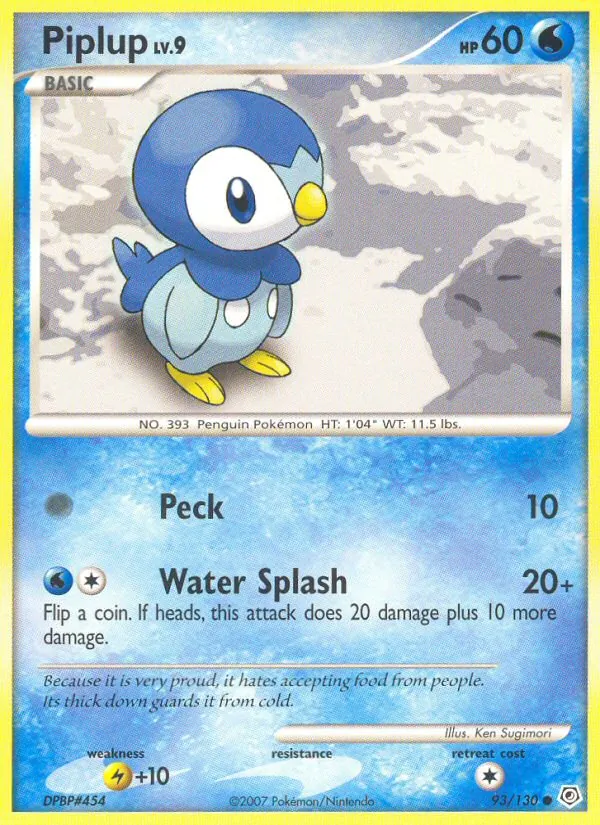 Piplup#93/130 · Diamond & PearlHolo2007$2.05
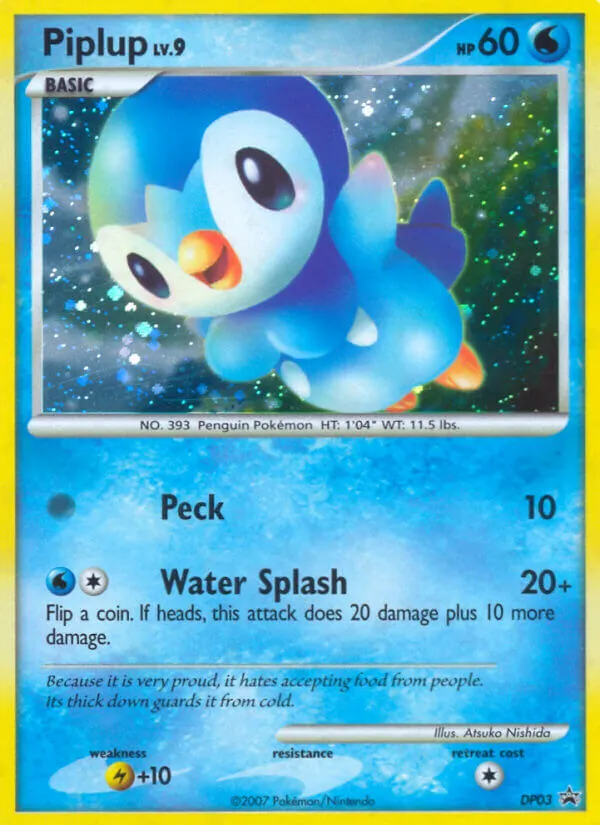 Piplup#DP03/56 · DP Black Star PromosHolo2007$19.98
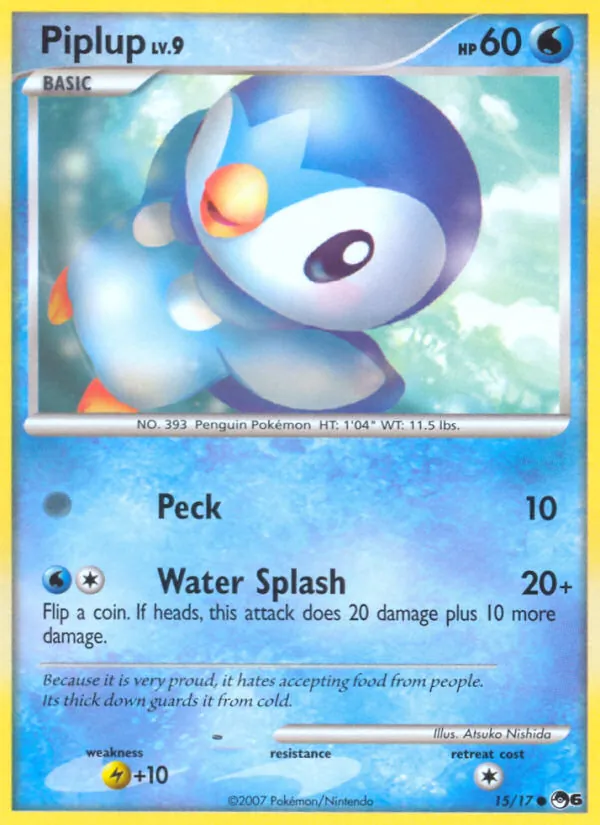 Piplup#15/17 · POP Series 6Holo2007$37.39
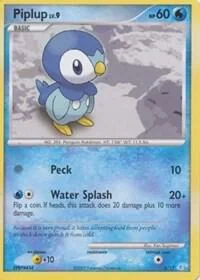 Piplup#5/12 · DP trainer Kit (Manaphy)2007—
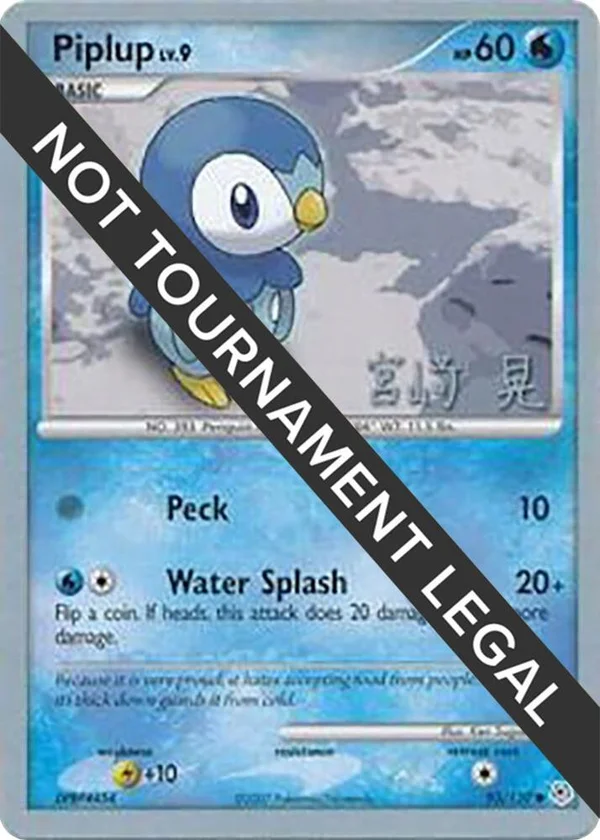 Piplup#93/130 · World Championships 20072007—
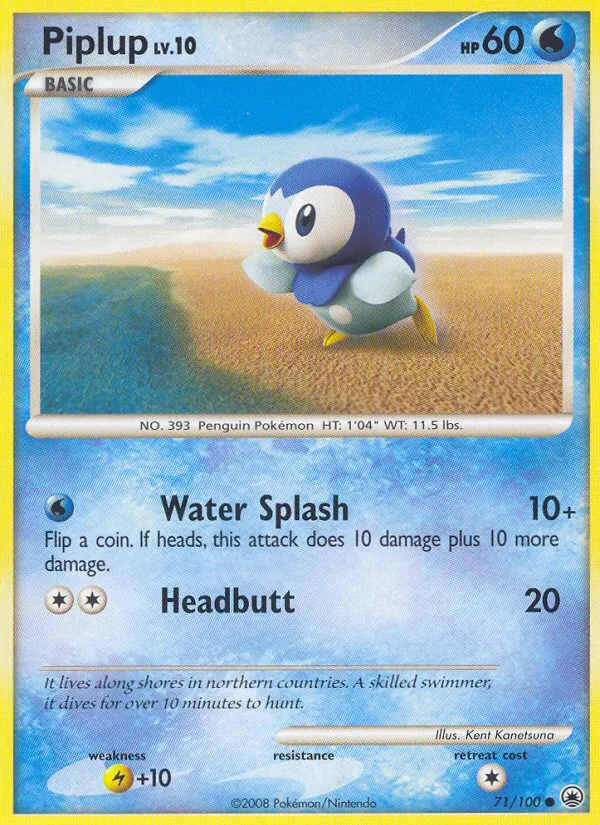 Piplup#71/100 · Majestic Dawn2008$2.51
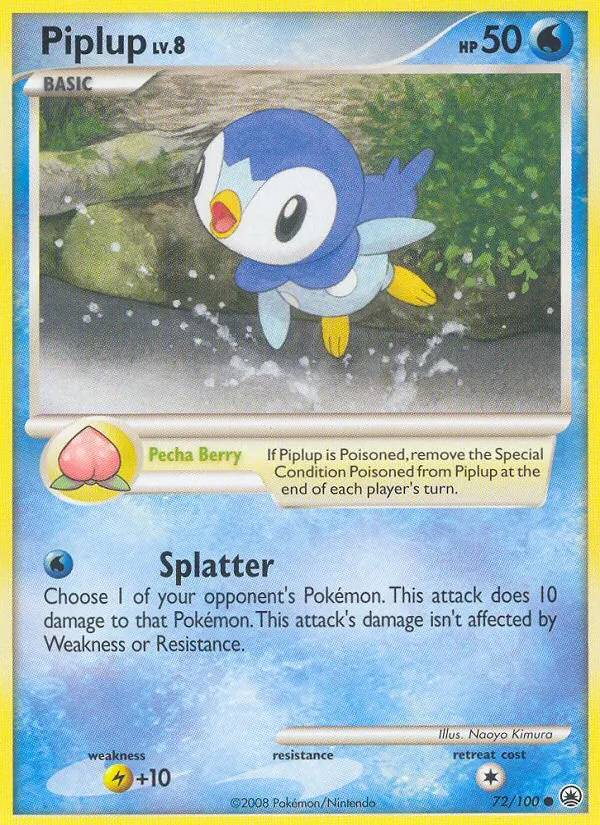 Piplup#72/100 · Majestic Dawn2008$5.87
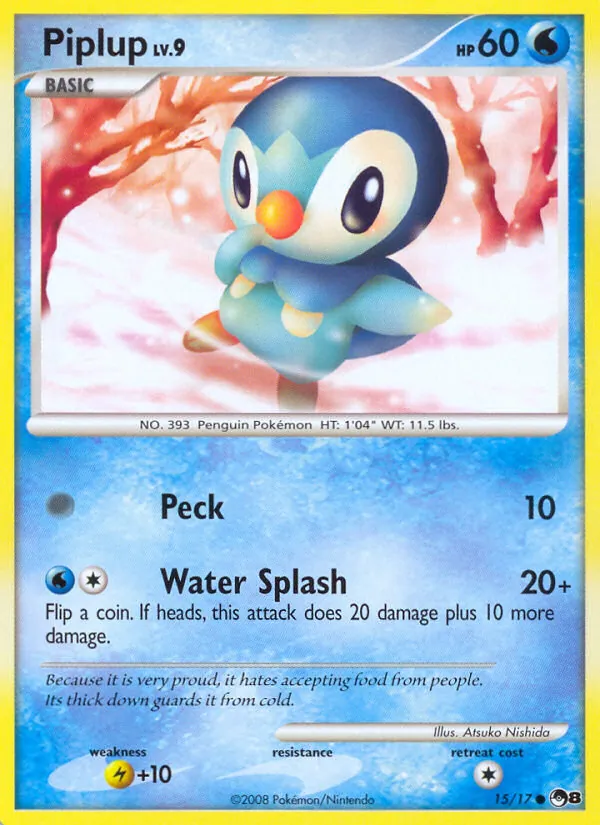 Piplup#15/17 · POP Series 82008$17.77
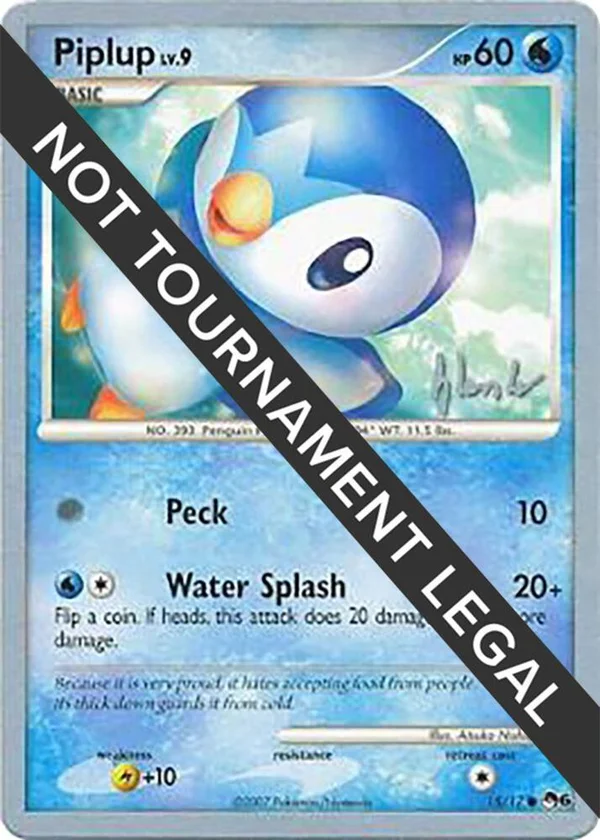 Piplup#15/17 · World Championships 20082008—
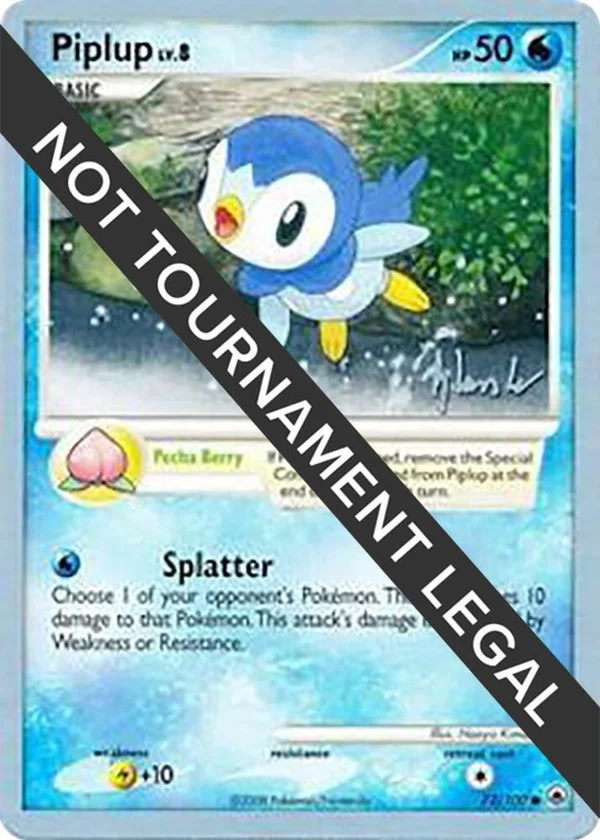 Piplup#72/100 · World Championships 20082008—
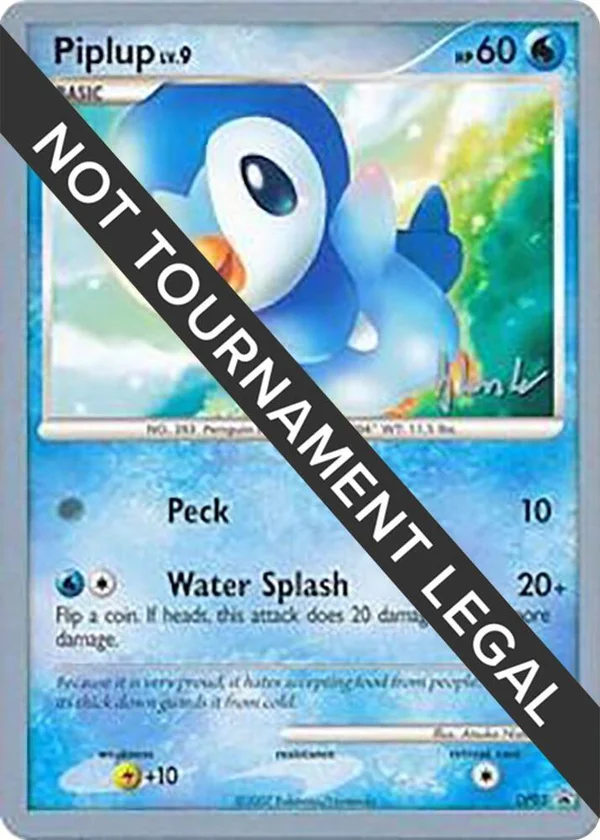 Piplup (DP03)#DP03 · World Championships 20082008—
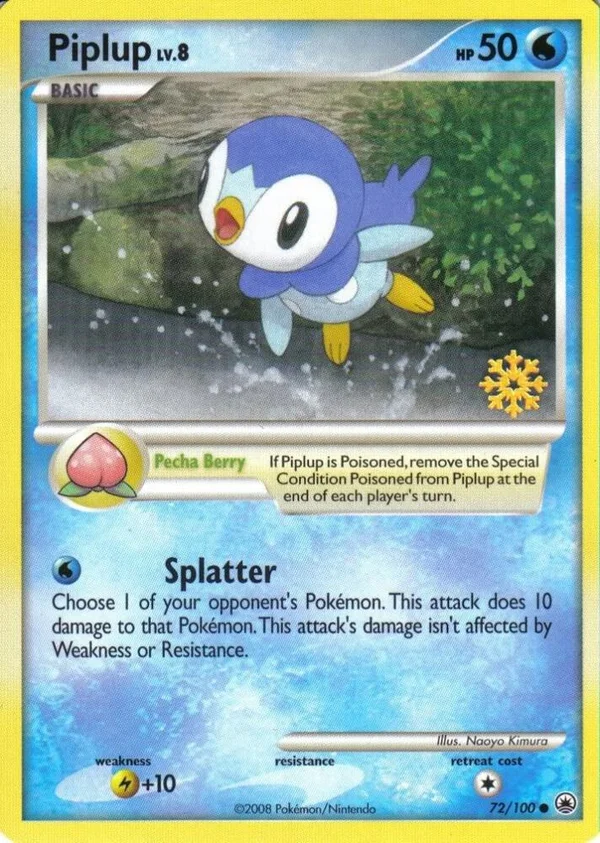 Piplup#72/100 · Countdown Calendar 20082008—
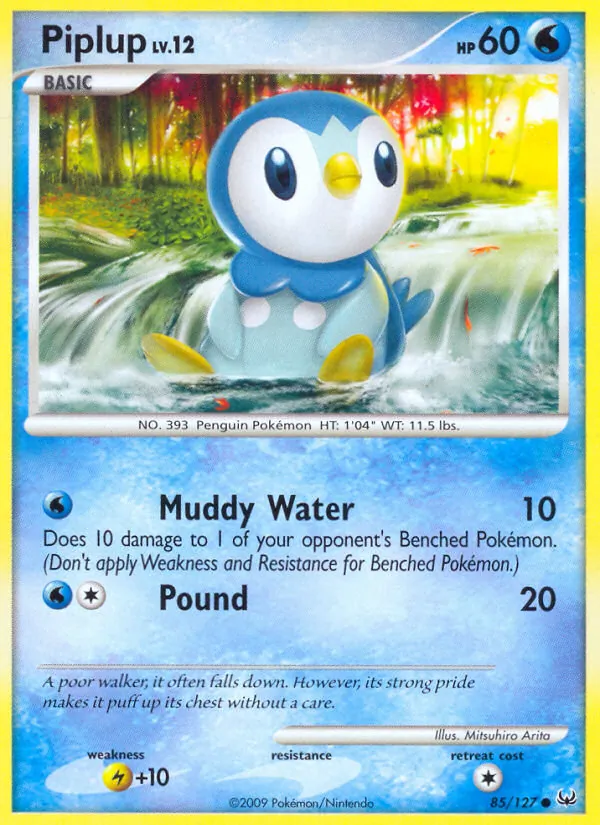 Piplup#85/127 · Platinum2009$4.67
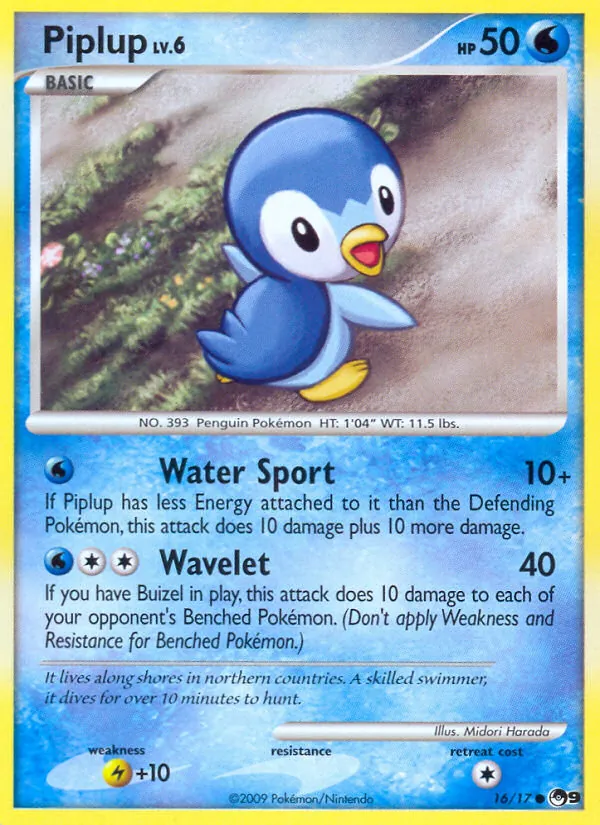 Piplup#16/17 · POP Series 92009$9.94
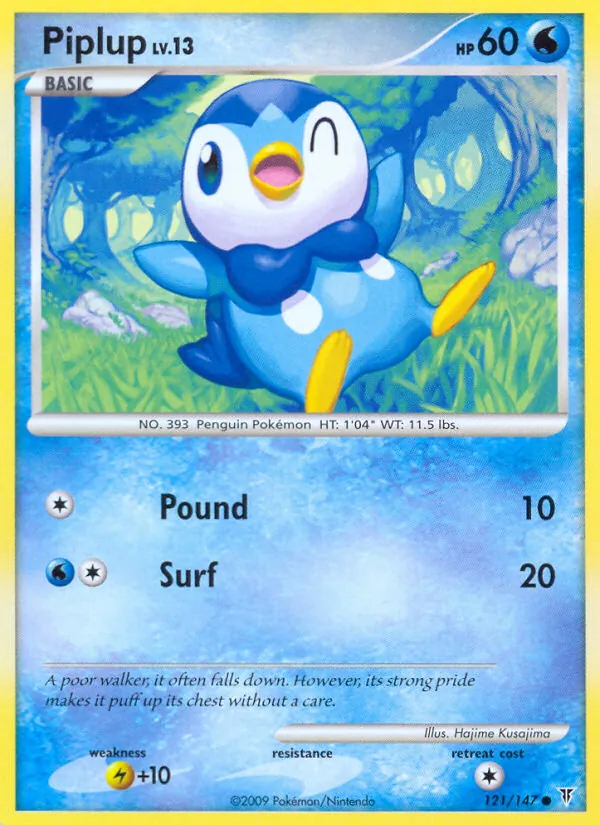 Piplup#121/147 · Supreme Victors2009$6.66
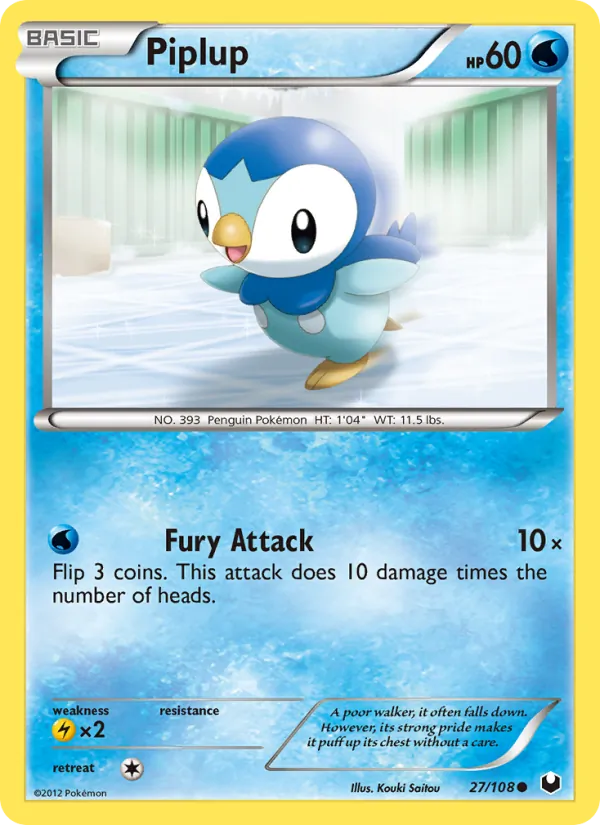 Piplup#27/108 · Dark Explorers2012$2.17
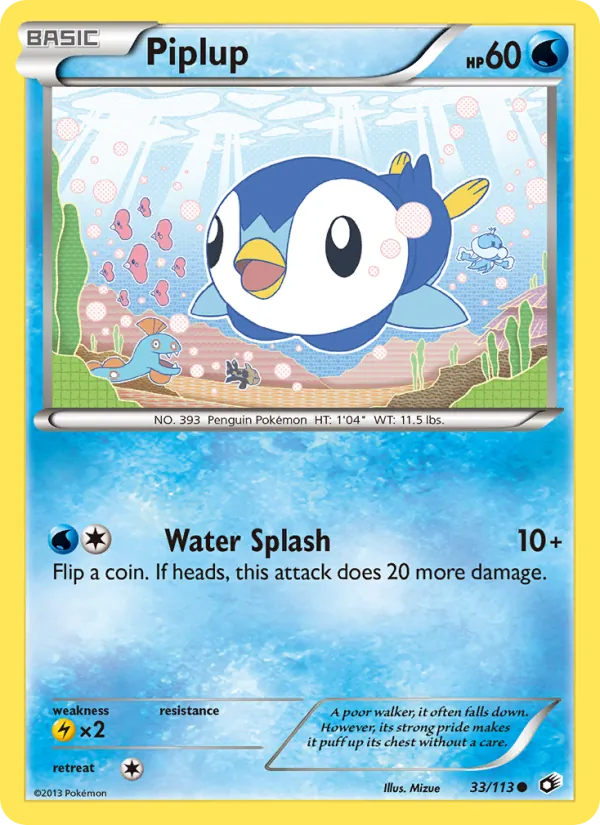 Piplup#33/113 · Legendary Treasures2013$4.44
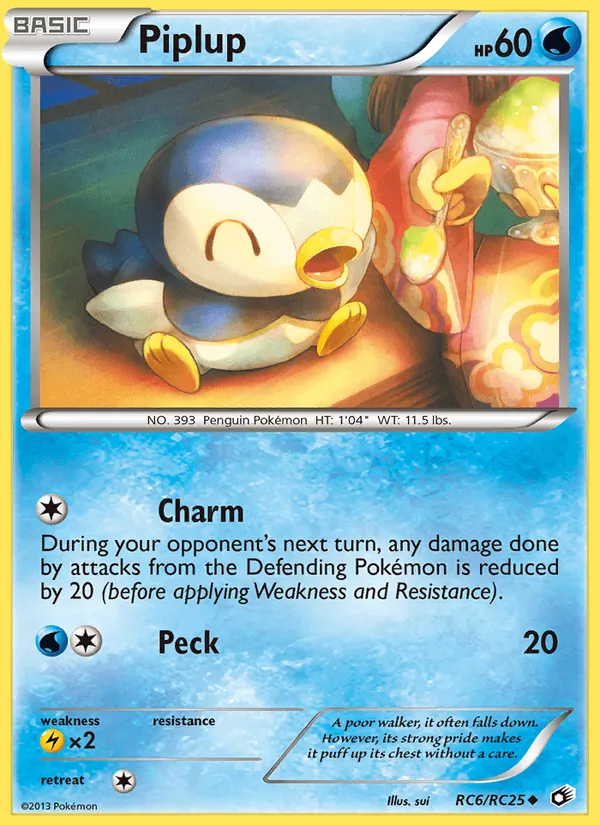 Piplup#RC6/113 · Legendary Treasures2013$4.44
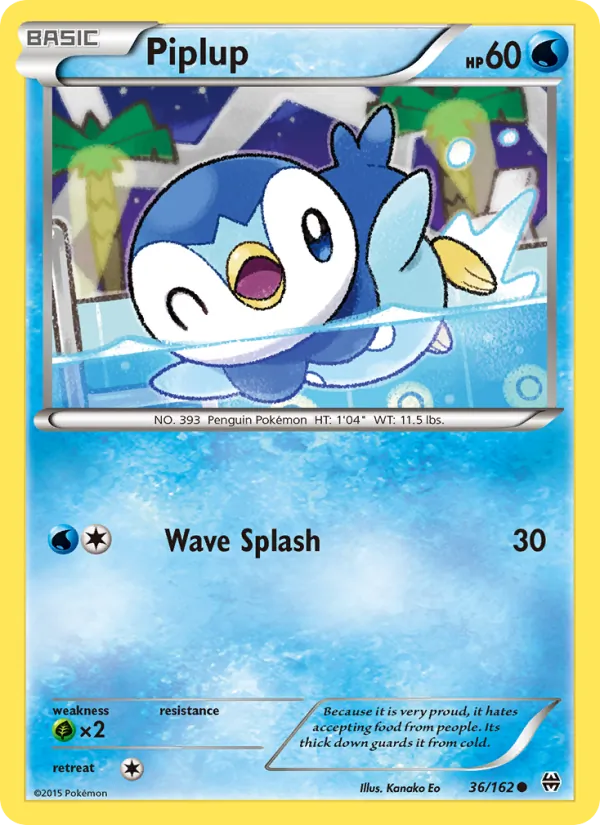 Piplup#36/162 · BREAKthrough2015$1.85
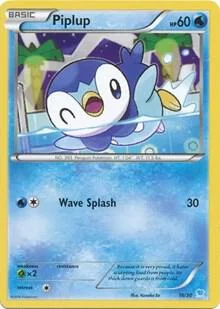 Piplup#16/30 · XY trainer Kit (Suicune)2016—
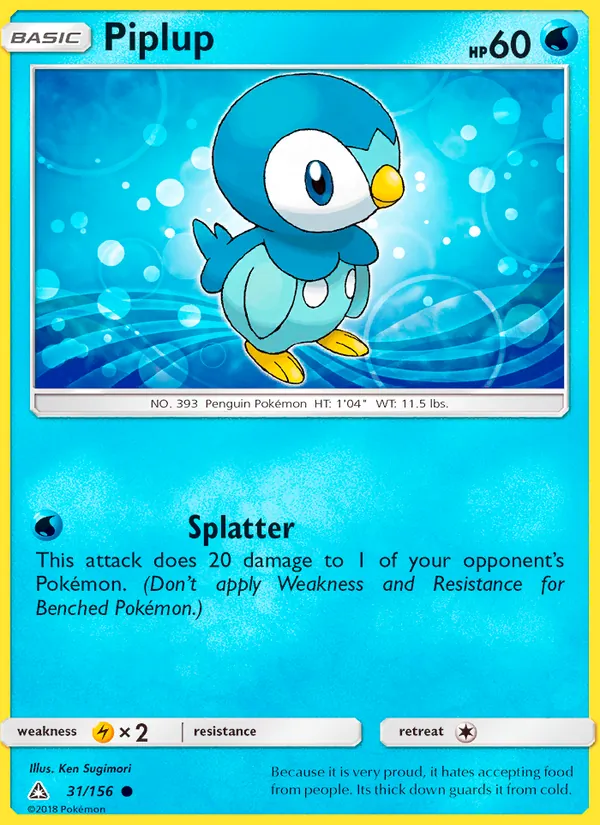 Piplup#31/156 · Ultra Prism2018$1.49
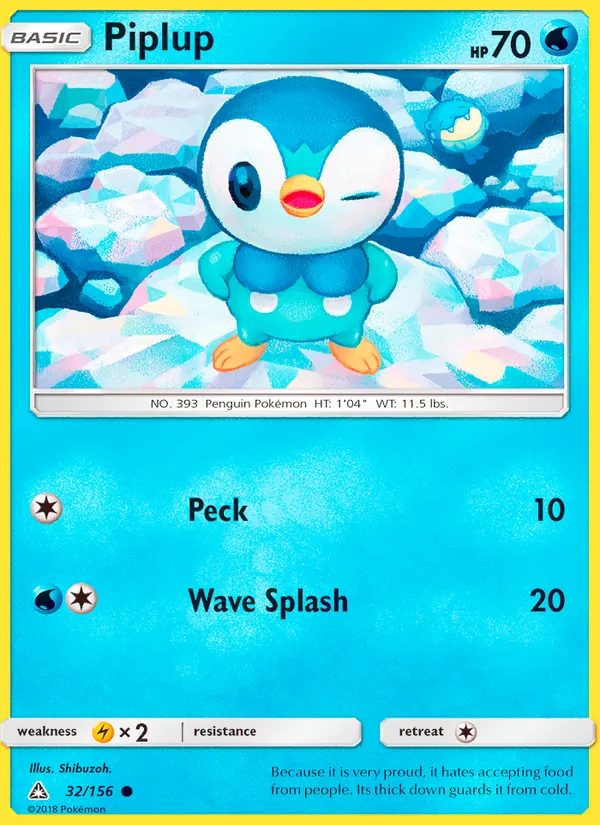 Piplup#32/156 · Ultra Prism2018$1.74
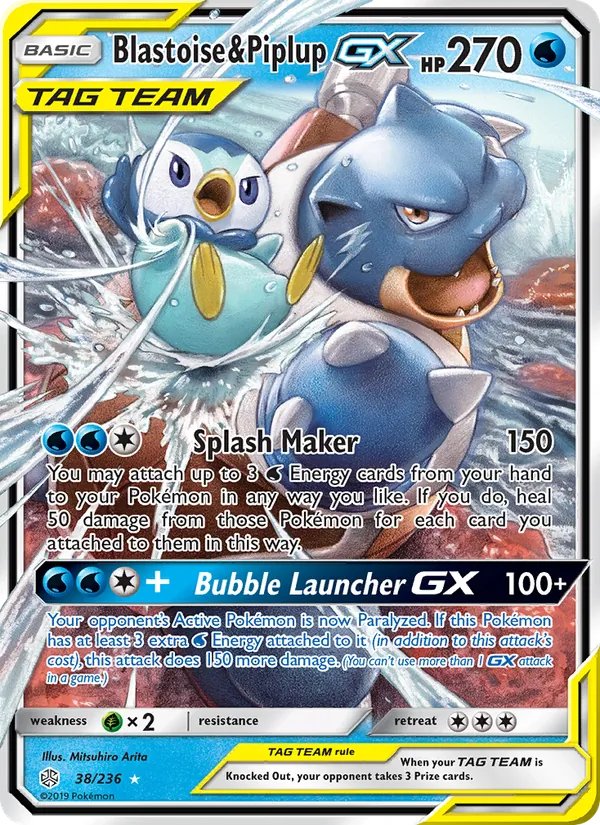 Blastoise & Piplup GX#38/236 · Cosmic EclipseHolo2019$75.00
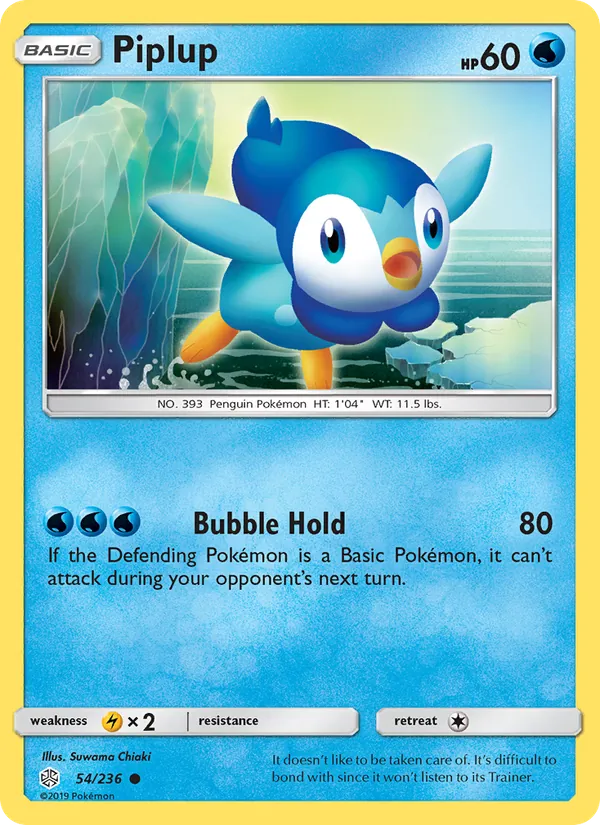 Piplup#54/236 · Cosmic Eclipse2019$1.36
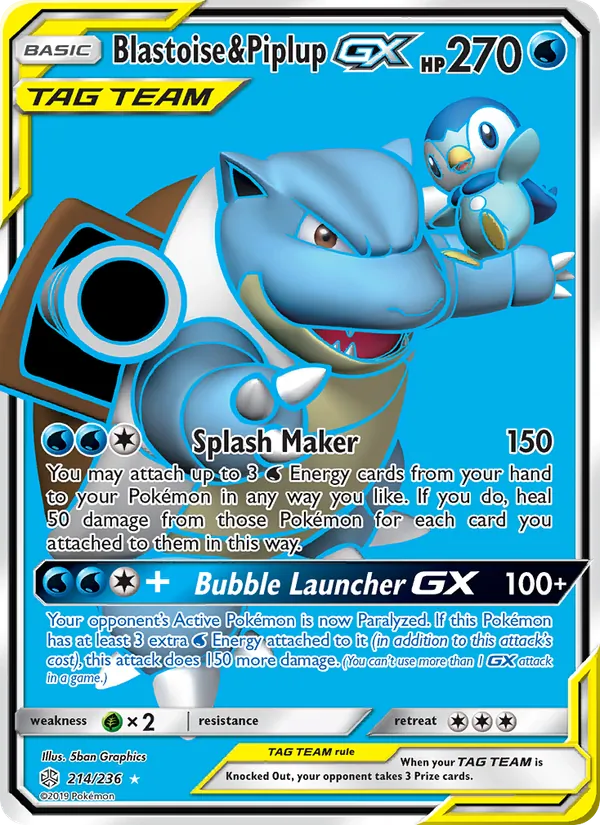 Blastoise & Piplup GX#214/236 · Cosmic EclipseHolo2019$81.00
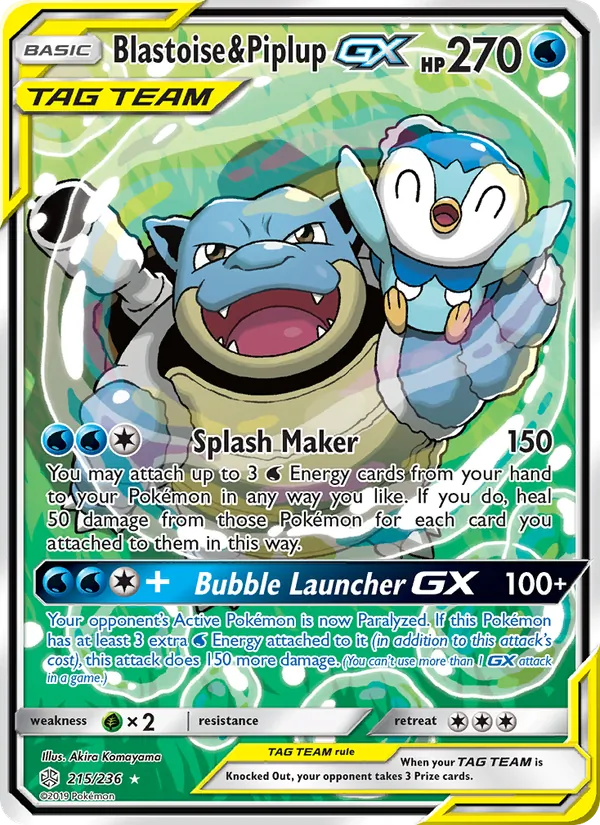 Blastoise & Piplup GX#215/236 · Cosmic EclipseHolo2019$403.57
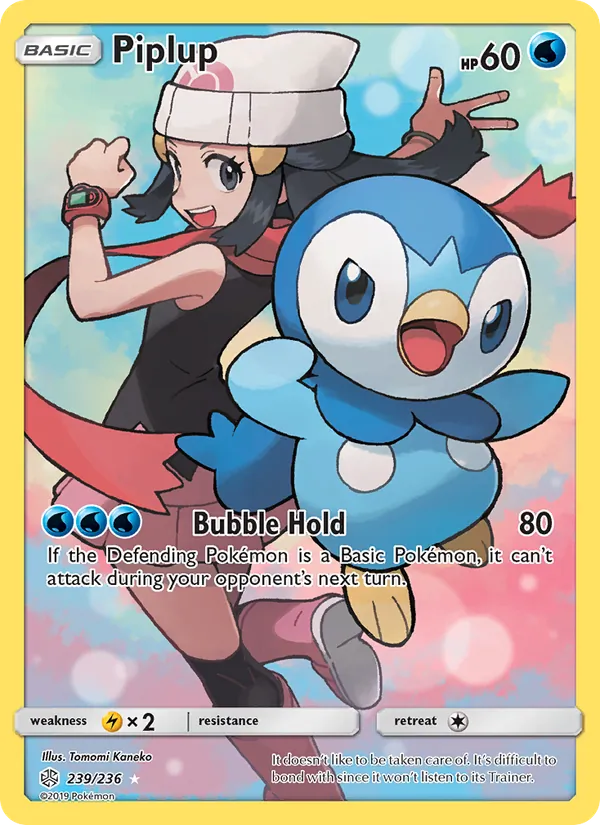 Piplup#239/236 · Cosmic EclipseHolo2019$55.94
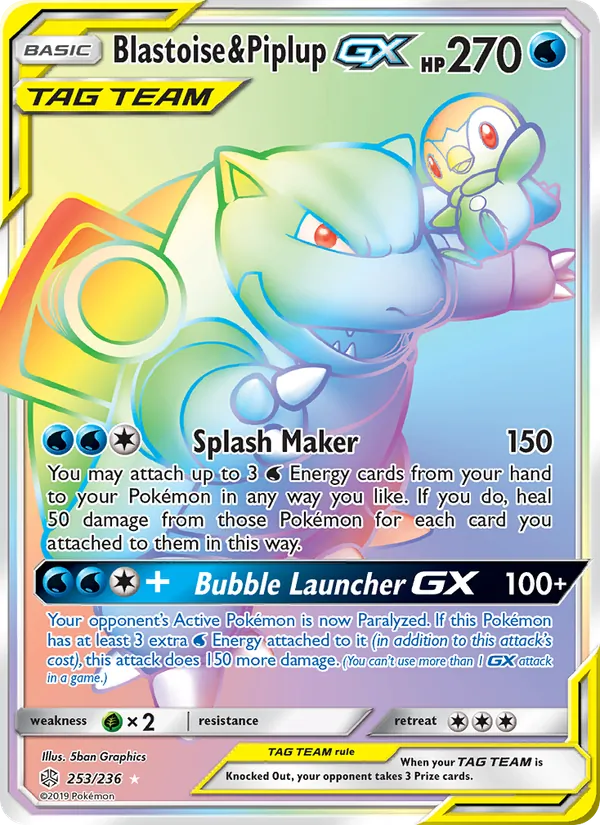 Blastoise & Piplup GX#253/236 · Cosmic EclipseHolo2019$145.00
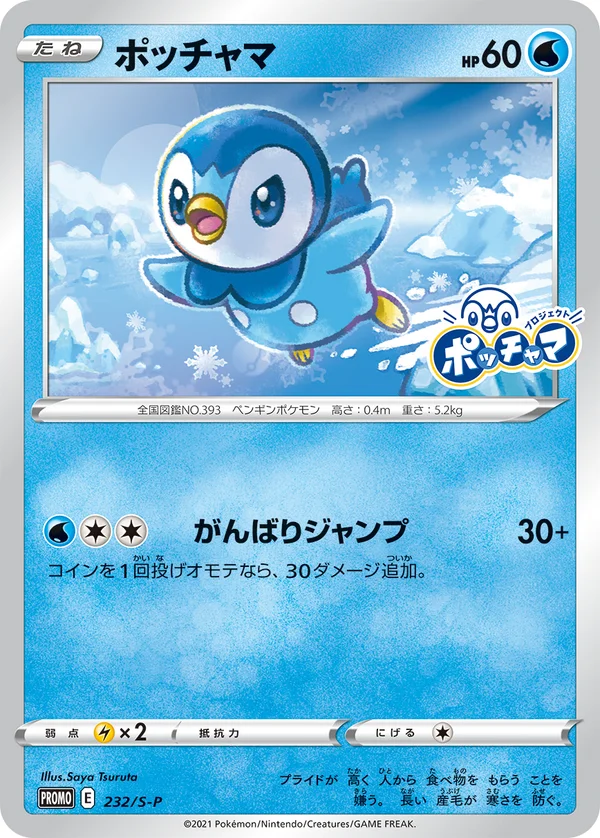 Piplup#232 · S-P プロモカードHolo2019—
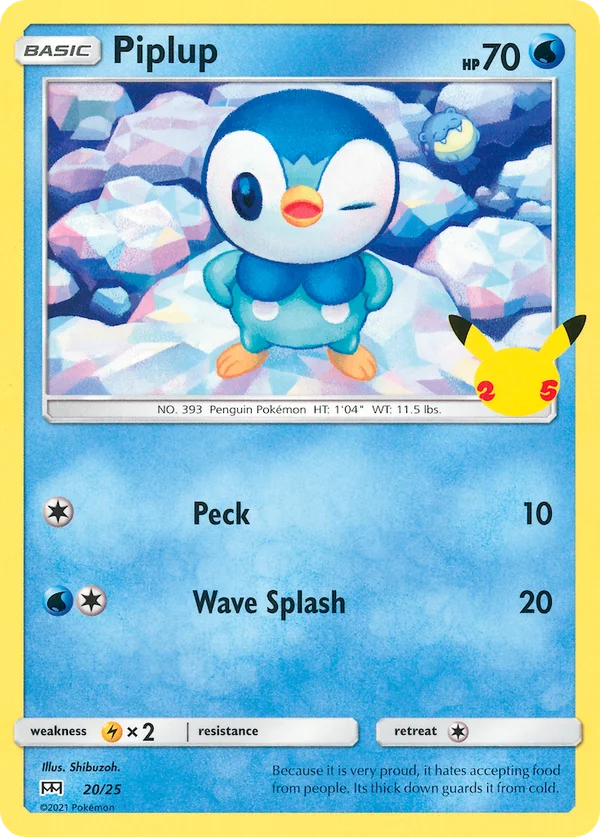 Piplup#20/25 · McDonald's Collection 2021Holo2021—
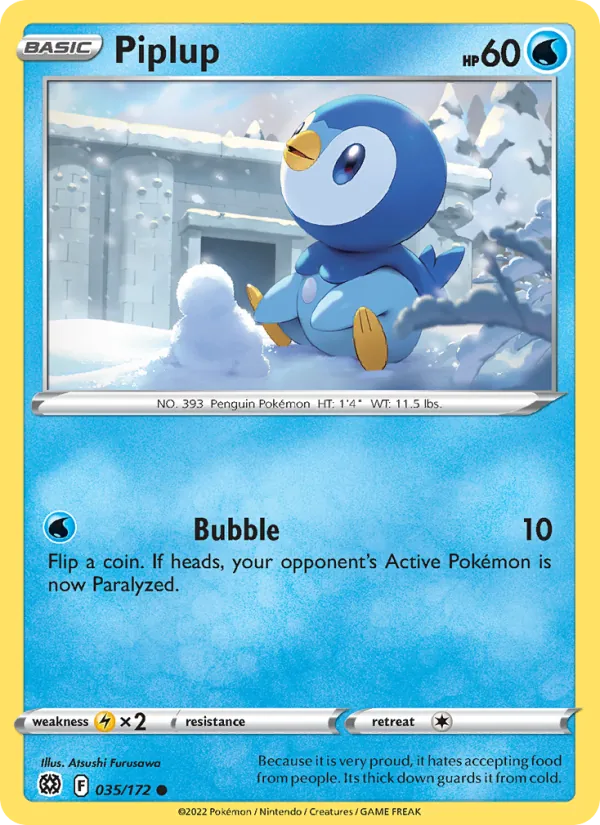 Piplup#35/172 · Brilliant Stars2022$0.26
- #112ポッチャマ#112 · メガ プロモカード2025—
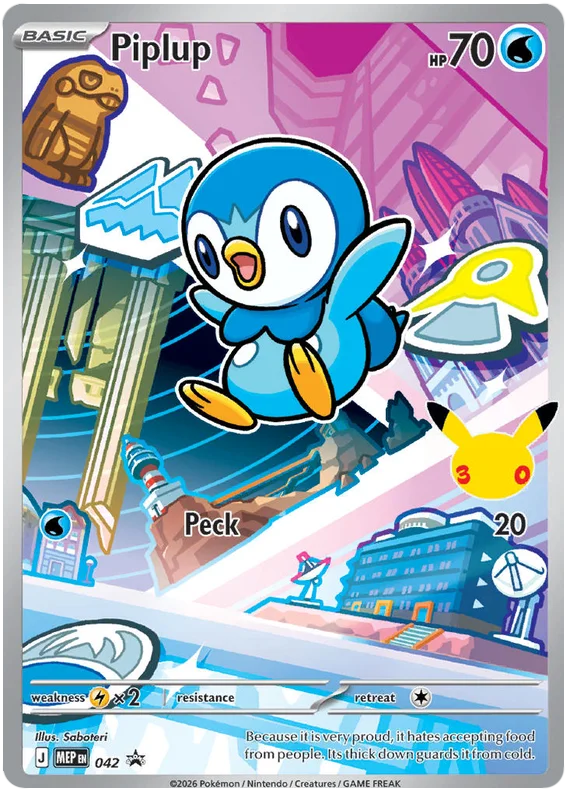 Piplup#42 · MEP Black Star PromosHolo2025$11.00
 Piplup#27/94 · Phantasmal Flames2025$0.21
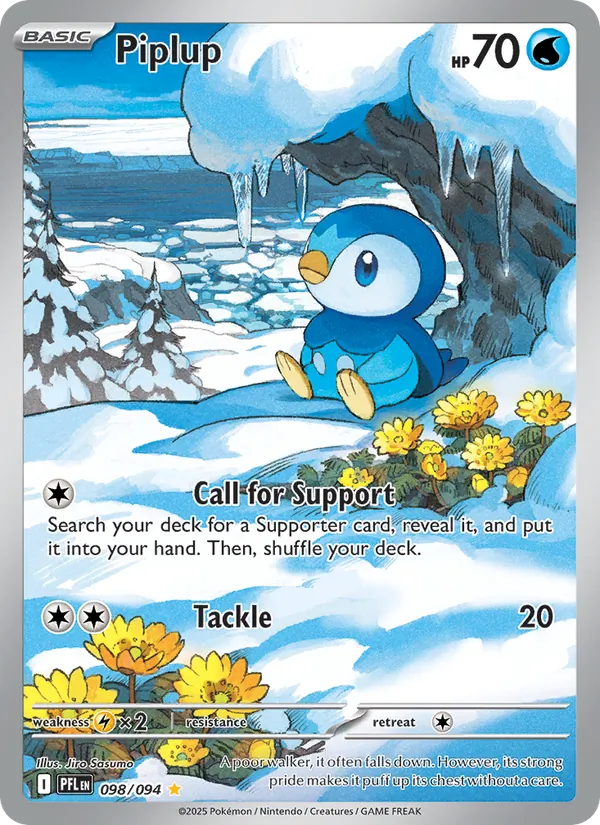 Piplup#98/94 · Phantasmal FlamesHolo2025$9.90
Most valuable Piplup cards
| Card | Set | Released | Market price |
|---|---|---|---|
| Blastoise & Piplup GX #215/236 | Cosmic Eclipse | 2019 | $403.57 |
| Blastoise & Piplup GX #253/236 | Cosmic Eclipse | 2019 | $145.00 |
| Blastoise & Piplup GX #214/236 | Cosmic Eclipse | 2019 | $81.00 |
| Blastoise & Piplup GX #38/236 | Cosmic Eclipse | 2019 | $75.00 |
| Piplup #239/236 | Cosmic Eclipse | 2019 | $55.94 |
| Piplup #15/17 | POP Series 6 | 2007 | $37.39 |
| Piplup #DP03/56 | DP Black Star Promos | 2007 | $19.98 |
| Piplup #15/17 | POP Series 8 | 2008 | $17.77 |
| Piplup #42 | MEP Black Star Promos | 2025 | $11.00 |
| Piplup #16/17 | POP Series 9 | 2009 | $9.94 |
About Piplup cards
Piplup's 33 cards run from Diamond & Pearl (May 2007) to Phantasmal Flames (November 2025), across 12 series. Sun & Moon printed the most, 8 cards across 2 sets, ahead of Diamond & Pearl (4) and World Championships (4). No set has more Piplup cards than Cosmic Eclipse, with 6.
Piplup's evolution line has 72 cards across its 3 Pokémon: Piplup 33, Prinplup 14 and Empoleon 25.
By rarity, Piplup's cards are 21 Common, 3 Promo, 3 Ultra Rare, 2 Secret Rare and 2 across 2 other rarities. 4 are ex, V, VMAX, VSTAR or GX cards, and 4 are numbered past their set's printed total.
25 of the 33 cards have a TCGplayer market price. The median Piplup card is $5.87; 12 are under $5 and 2 are $100 or more. The three most valuable, Blastoise & Piplup GX #215/236 from Cosmic Eclipse, Blastoise & Piplup GX #253/236 from Cosmic Eclipse and Blastoise & Piplup GX #214/236 from Cosmic Eclipse, are $630 between them, 55% of the master set's cost.
Atsuko Nishida has illustrated the most Piplup cards, 3, followed by Ken Sugimori (3) and 5ban Graphics (2). The first, Piplup #93/130 from Diamond & Pearl, was drawn by Ken Sugimori.
Beyond the master set, 3 extra printings exist that a grand master set would add: 2 Stamped and 1 Cosmos holo.
Piplup cards by set
| Set | Series | Released | Cards | Master |
|---|---|---|---|---|
| Diamond & Pearl | Diamond & Pearl | May 1, 2007 | 1 | 2 |
| DP Black Star Promos | Diamond & Pearl | May 1, 2007 | 1 | 1 |
| POP Series 6 | POP | Sep 1, 2007 | 1 | 1 |
| DP trainer Kit (Manaphy) | Trainer kits | Sep 1, 2007 | 1 | 1 |
| World Championships 2007 | World Championships | Sep 1, 2007 | 1 | 1 |
| Majestic Dawn | Diamond & Pearl | May 1, 2008 | 2 | 4 |
| POP Series 8 | POP | Sep 1, 2008 | 1 | 1 |
| World Championships 2008 | World Championships | Sep 1, 2008 | 3 | 3 |
| Countdown Calendar 2008 | Countdown Calendar | Oct 1, 2008 | 1 | 1 |
| Platinum | Platinum | Feb 11, 2009 | 1 | 2 |
| POP Series 9 | POP | Mar 1, 2009 | 1 | 1 |
| Supreme Victors | Platinum | Aug 19, 2009 | 1 | 2 |
| Dark Explorers | Black & White | May 9, 2012 | 1 | 2 |
| Legendary Treasures | Black & White | Nov 6, 2013 | 2 | 4 |
| BREAKthrough | XY | Nov 4, 2015 | 1 | 2 |
| XY trainer Kit (Suicune) | Trainer kits | Apr 27, 2016 | 1 | 1 |
| Ultra Prism | Sun & Moon | Feb 2, 2018 | 2 | 4 |
| Cosmic Eclipse | Sun & Moon | Nov 1, 2019 | 6 | 7 |
| McDonald's Collection 2021 | McDonald's Collection | Feb 9, 2021 | 1 | 1 |
| Brilliant Stars | Sword & Shield | Feb 25, 2022 | 1 | 2 |
| MEP Black Star Promos | Mega Evolution | Sep 26, 2025 | 1 | 1 |
| Phantasmal Flames | Mega Evolution | Nov 14, 2025 | 2 | 3 |
Piplup master set FAQ
How many Piplup cards are there?
There are 33 English Piplup cards across 22 sets, from Diamond & Pearl (2007) to Phantasmal Flames (2025). Counting 14 reverse holos, a Piplup master set has 47 cards.
How much does a Piplup master set cost?
One copy of every card in the Piplup master set costs at least $1,138 (39 of 47 priced) at current TCGplayer market prices. Prices are refreshed nightly.
What is the most expensive Piplup card?
Blastoise & Piplup GX #215/236 from Cosmic Eclipse, at a market price of $403.57.
What was the first Piplup card?
Piplup #93/130 from Diamond & Pearl, released May 1, 2007.
How many Japanese Piplup cards are there?
There are 19 Japanese Piplup cards across 9 sets (2006–2025), 7 of which were never printed in English. They are listed on the Japanese Piplup page and are not counted in the English master set.
What counts as a Piplup master set?
One copy of every English Piplup card, plus a reverse holo of each card that was printed as one and every pack-pulled pattern printing (Poké Ball, Master Ball). Cards released only in Japan are shown on this page but are not counted.
Related master sets
Piplup evolution line: Piplup → Prinplup Master Set → Empoleon Master Set
More Water-type Pokémon: Huntail Master Set · Gorebyss Master Set · Relicanth Master Set · Luvdisc Master Set · Regice Master Set · Kyogre Master Set · Buizel Master Set · Floatzel Master Set